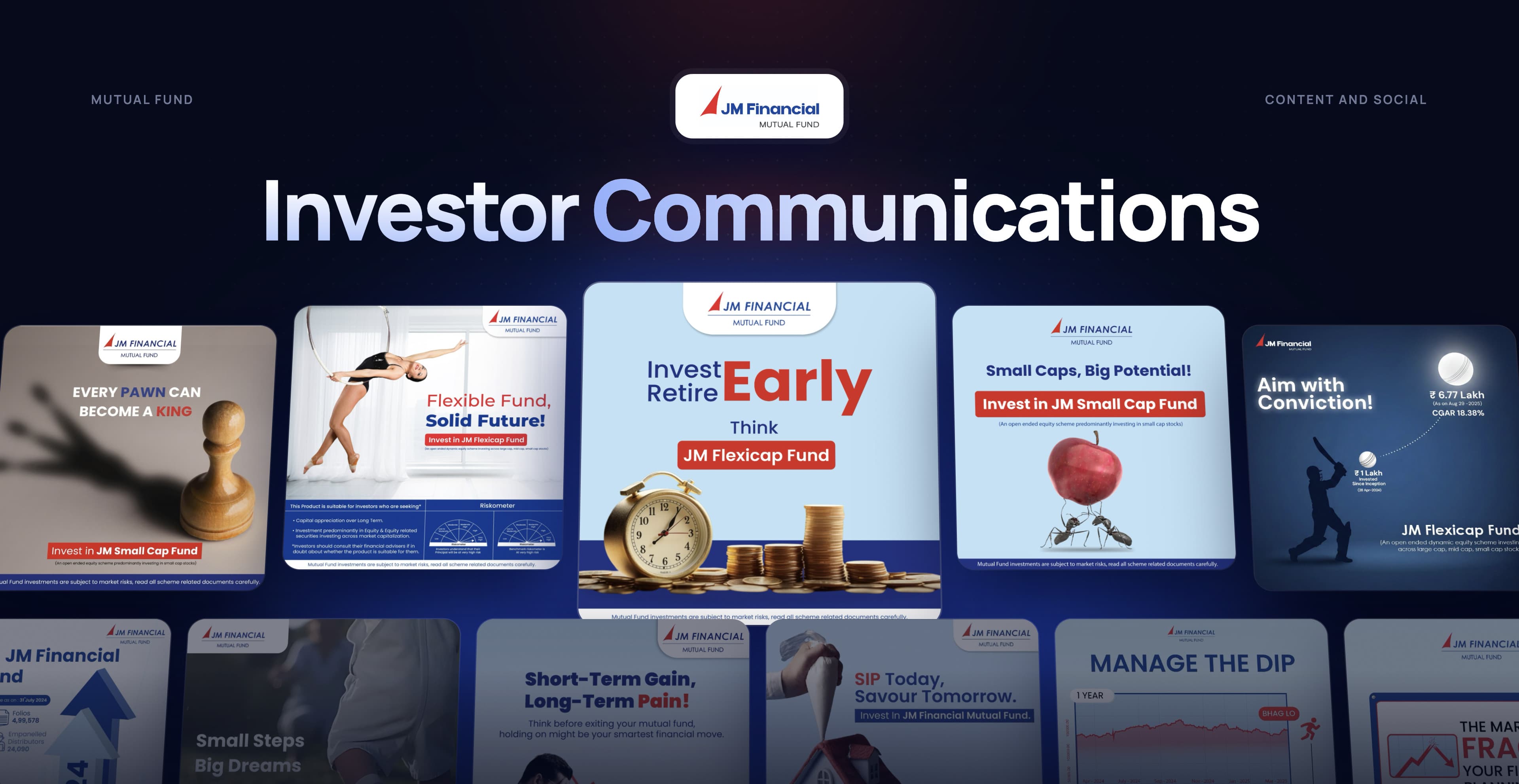



























































AEO - Answer Engine Optimisation - for a BFSI brand is a different scoreboard from classic SEO, and the weighting of what moves citations is genuinely different. ChatGPT, Claude, Perplexity and Gemini pull BFSI answers preferentially from a narrow authority set - Wikipedia, RBI / SEBI / IRDAI published material, AMFI (for mutual funds), trusted financial journalism (Mint, Economic Times, Moneycontrol, Business Standard, BloombergQuint), and a specific tier of educational sites (Investopedia, ET Money / Groww / Zerodha Varsity where recognised). Brand-level citation requires earning entry into that authority tier rather than just ranking on Google. Baclinc runs AEO on its own stack with llms.txt, llms-full.txt, an FAQ-schema-rich sitewide architecture and entity reconciliation across Wikidata / Crunchbase / LinkedIn - and for BFSI clients including JM Financial Mutual Fund, we extend that playbook with the YMYL overlays the category demands. Three structural realities shape AEO for BFSI India. LLMs penalise brands that issue specific financial advice - ChatGPT will often decline to name a specific mutual fund or credit card as 'best' and instead cite educators (ET Money, Cleartax, Zerodha Varsity). That means AEO work for a BFSI brand is less about getting named as 'best' and more about getting cited as the authoritative source on 'what to consider when choosing', 'how the category is structured', and 'what the regulator requires'. Second, entity consistency across Wikidata and the regulator registry (SEBI / RBI / IRDAI) is load-bearing. Third, llms.txt directives have to be compliance-safe - you cannot let an LLM crawler ingest non-compliant draft content by accident.
AEO for BFSI in India sits at the intersection of three specialist disciplines - YMYL content quality, financial-entity graph work, and compliance-safe AI retrieval - and none of them port cleanly from D2C AEO practice. LLM retrieval for Indian BFSI queries shows a consistent pattern across the major models: Wikipedia is the #1 source for entity-level answers (fund house, NBFC, insurer identity, founder, history, AUM), AMFI is the authority tier for mutual fund scheme data, RBI's own published material dominates NBFC and banking regulatory explanation, IRDAI documents dominate insurance regulatory questions, and ET Money / Cleartax / Zerodha Varsity / Groww's educational content dominates 'how to choose' and 'how does X work' queries. Brand-authored content from an AMC, NBFC or insurer rarely cracks the top-3 citation slots unless it's on a specific-to-brand query ('what does JM Financial Mutual Fund offer', 'how does [NBFC] EMI work'). The playbook therefore splits in two - for brand-specific queries the work is entity reconciliation + owned FAQ schema + Wikipedia presence; for category queries the work is educational long-form that LLMs recognise as cite-worthy rather than promotional. The second structural reality is that LLMs filter financial-advice content aggressively. A piece that says 'SIP in Nifty50 index funds is best for long-term wealth creation' gets filtered as advice; a piece that says 'rupee-cost averaging through SIP reduces market-timing risk for long-term investors - the trade-off is you may underperform lump-sum in sustained bull markets' gets cited. The editorial posture is scheme-agnostic, framework-explaining, trade-off-acknowledging. Most BFSI brand content fails this test because the marketing incentive is to push the specific product - which is exactly why educator sites eat the citation share. Third, FAQ schema is disproportionately load-bearing for BFSI AEO. LLMs pull FAQ-structured content preferentially because it matches the question-answer retrieval pattern. A BFSI site with 80-150 FAQs across product lines, each tagged to regulatory context (SEBI / RBI / IRDAI / DPDP where relevant), each 150-350 words deep rather than 40-word surface answers, is citation fuel. Sites with 8-15 generic FAQs miss the citation surface entirely. Finally, llms.txt for BFSI is not a generic copy-paste. Draft content, under-review content and compliance-archived content must be disallowed explicitly, otherwise an LLM crawler can ingest a pre-review version and later cite the brand on language that has since been corrected. The cost of that in a YMYL regulated category is not theoretical.