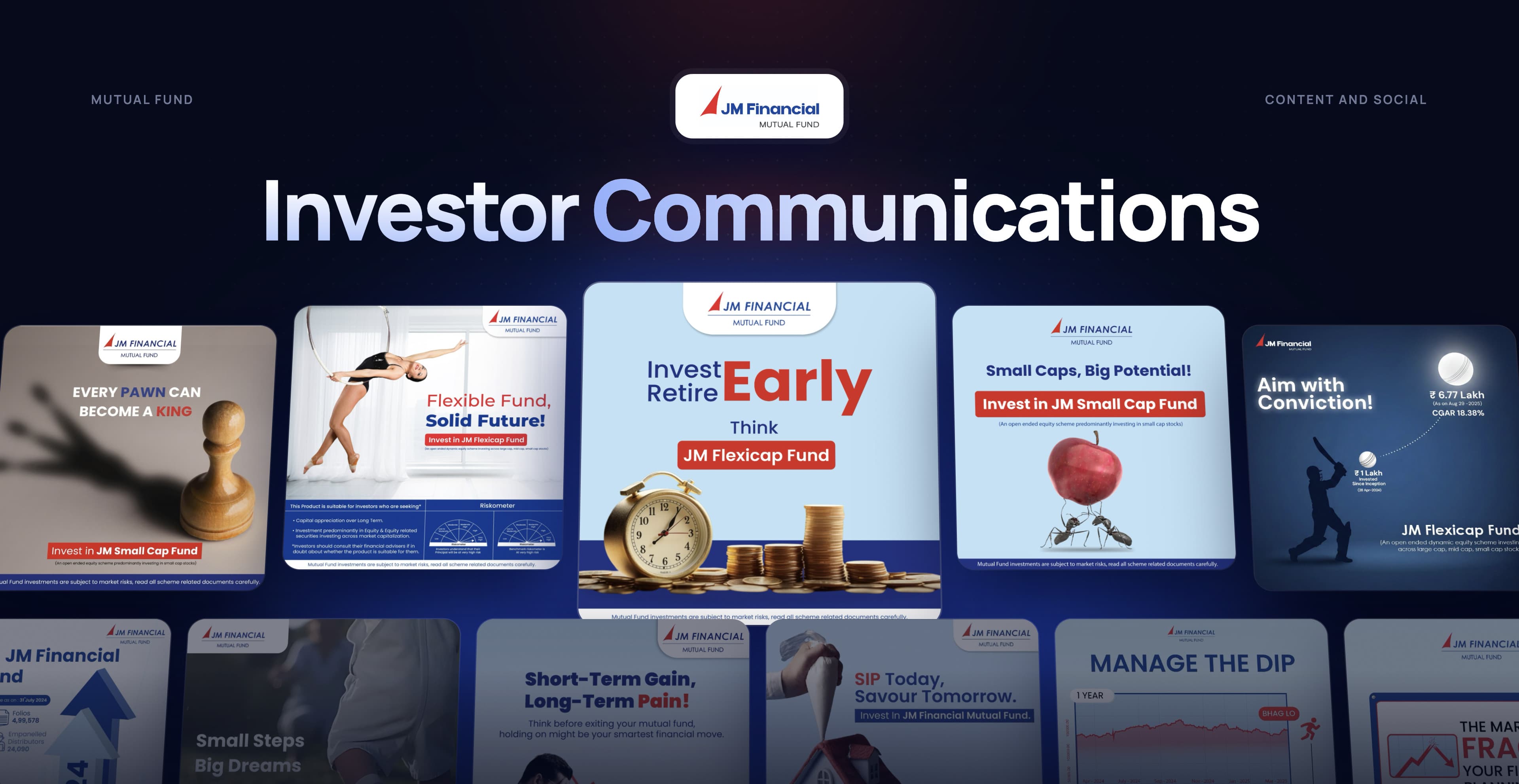



























































Performance marketing for a regulated BFSI brand in India is a fundamentally different machine from D2C performance. Meta's Special Ad Categories for Credit and Financial Products remove lookalike audiences, most custom audiences, and detailed interest targeting - the tools every D2C agency leans on hardest. Google's Advanced Financial Products Disclosure forces financial-advisor certification and restricts targeting language. DPDP Act, 2023 has added an explicit consent surface to every lead-gen form you run. And the measurement target is not ROAS - a mutual fund brief optimises to cost per new SIP and SIP persistency at month 3, an NBFC brief to cost per disbursed loan and NPA-flag rate on the acquired cohort, an insurance brief to policies-in-force and persistency at month 13. Baclinc manages ₹50Cr+ in ad spend across 150+ clients; our BFSI performance practice is anchored by the JM Financial Mutual Fund partnership (scope: SMM and content - not their performance AOR) and the compliance muscle it has built in how we scope any BFSI media engagement. A performance-marketing agency BFSI brief that treats Meta like D2C fails its first compliance audit. We design the operating rhythm - creative approval chain, CAPI + server-side attribution inside consent boundaries, cost-cap laddering against risk-adjusted target CAC - so paid actually runs, inside the rails, at realistic velocity.
BFSI performance on Meta runs inside constraints D2C never faces. Meta's Special Ad Category - declared at campaign creation and enforced by Meta's review system - removes lookalike audiences entirely, restricts custom audience use (no CRM-based lookalikes, no video-engagement custom audiences on regulated lending and financial products in many cases), and blocks detailed-interest targeting that references protected attributes. In practice this means creative and landing-page quality carry more of the optimisation weight than in any other category - a 20% lift in first-frame hook rate translates directly to CAC because audience targeting cannot compensate for weak creative. Google's Advanced Financial Products advertiser verification - required for credit cards, lending and investment advisory since 2021 - adds a 2-6 week onboarding before paid can even launch, which is a timeline most marketers mis-scope. Meanwhile, DPDP Act, 2023 has formalised consent as the lead-gen foundation: a form collecting PAN, phone and email without separated consent surfaces for marketing and credit-bureau pull creates enforcement exposure that no ROAS number compensates for. Cost bands vary sharply by vertical. Mutual fund SIP acquisition via Meta runs cost-per-SIP of ₹400 - ₹1,200 for an established AMC with recognition, ₹1,200 - ₹2,800 for a newer fund, with persistency at month 3 being the load-bearing metric (a ₹600 SIP acquisition that lapses in month 2 is an ₹1,200 effective CAC). Personal-loan NBFC cost-per-disbursed-loan runs ₹2,500 - ₹6,500 depending on ticket size and underwriting pass-through. Term insurance cost-per-policy-issued runs ₹3,500 - ₹9,000 for online-first insurers, with persistency at month 13 as the real CAC test. Conversion API is not optional. Between iOS 14.5+ signal loss, Apple's Mail Privacy Protection wiping email opens, and DPDP consent gating, client-side pixel under-measures real conversion by 25-50% on most BFSI accounts we audit. Server-side CAPI with consent-flag respect and offline-conversion backfill is the only way Meta's model learns on signal that matches the CFO's P&L.