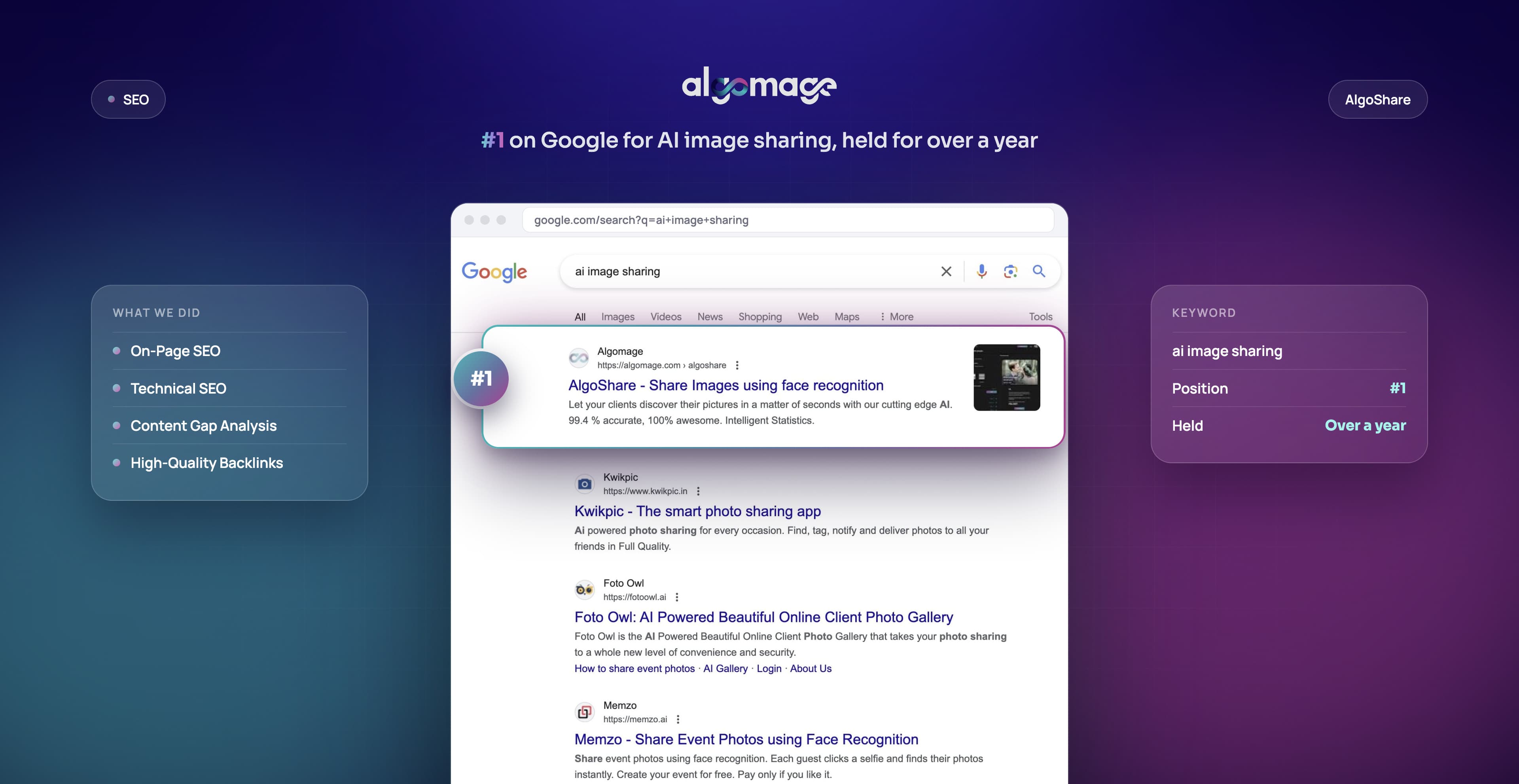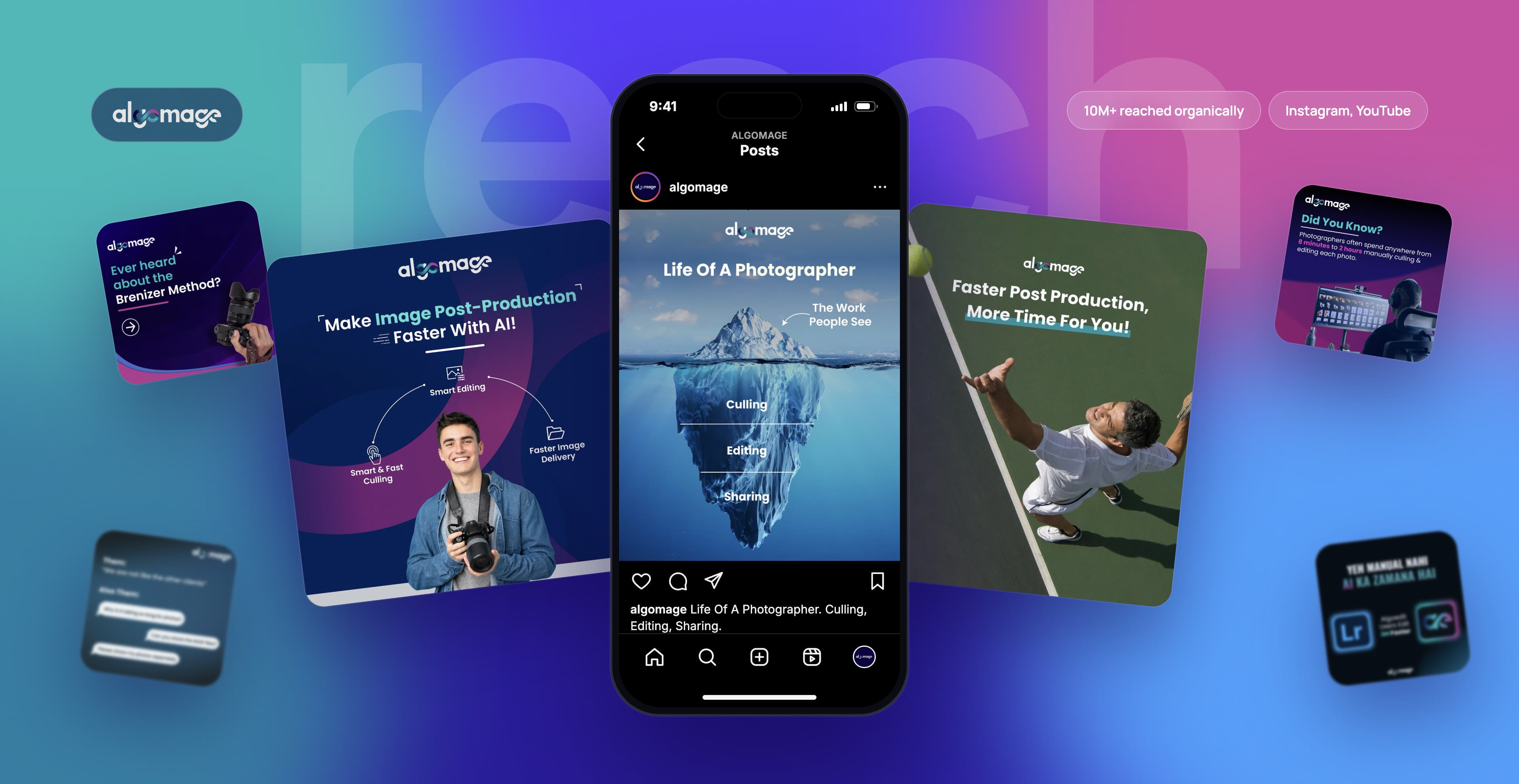





















































SaaS marketing in India operates on a fundamentally different economic curve than D2C. LTV compounds over 3-5 years, not 90 days. The buyer is often a PM or engineer who researches on Google, GitHub and Twitter before ever opening a sales deck. Channels like Instagram and Meta retargeting that define D2C barely move the needle. What moves SaaS is topical authority in search, developer-credible content, a clean onboarding funnel, and - increasingly - LLM citation, because buyers now ask ChatGPT or Perplexity 'best SaaS for X in India' before they Google. Baclinc runs this stack with a proof point we're proud to name: Algomage, an Indian AI image SaaS, holds the #1 spot for its category's most competitive keyword and has held it for over a year. On the content side, Algomage also drives 10M+ organic reach through a Marathi-first social strategy - a reminder that India-specific language plays matter even in global SaaS. The same playbook - topical SEO, developer-grade content, AEO structuring, product-led onboarding - ports to B2B fintech SaaS, devtools, vertical SaaS and anything with a self-serve or PLG motion.
SaaS in India sits in an unusual competitive position globally - Indian SaaS exports ~$13Bn annually (NASSCOM), with companies like Zoho, Freshworks, Postman, Chargebee, Razorpay, Browserstack, ClearTax and dozens more building globally. What that means for a new SaaS is: the competitive bar on content and SEO is set by companies with 50-200 person content teams and 8-figure SEO budgets. A 3-person content-and-SEO operation cannot out-volume Zoho. What works is topical specificity - owning a narrow cluster deeply instead of competing broadly. Algomage's path is illustrative: pick a cluster (AI image enhancement, specifically the photography vertical), own it with technical depth, author credibility and integrations-content, then expand outward. The channel mix for Indian SaaS skews heavily to organic: SEO 45-60% of top-of-funnel, AEO 5-15% (growing fast), developer content + GitHub 10-20%, paid 10-20%, social 5-10%, events/community 5-15%. Paid is usually branded search, retargeting and narrow category-term Google Ads - not cold Meta acquisition which rarely pays back for a typical $50-200/mo subscription product. LTV math matters enormously: for a $50/mo product with 30% annual churn, a new customer's 3-year LTV is roughly $1,200; paying CAC up to $400 (CAC:LTV of 1:3) is defensible. For a $500/mo product with 15% annual churn, 3-year LTV is roughly $15,000 and CAC headroom is much higher - which changes what channels are worth running. PLG versus sales-led versus hybrid is the other axis that shapes everything: PLG products live or die on activation-rate and self-serve conversion; sales-led on pipeline velocity; hybrid on the handoff between the two.