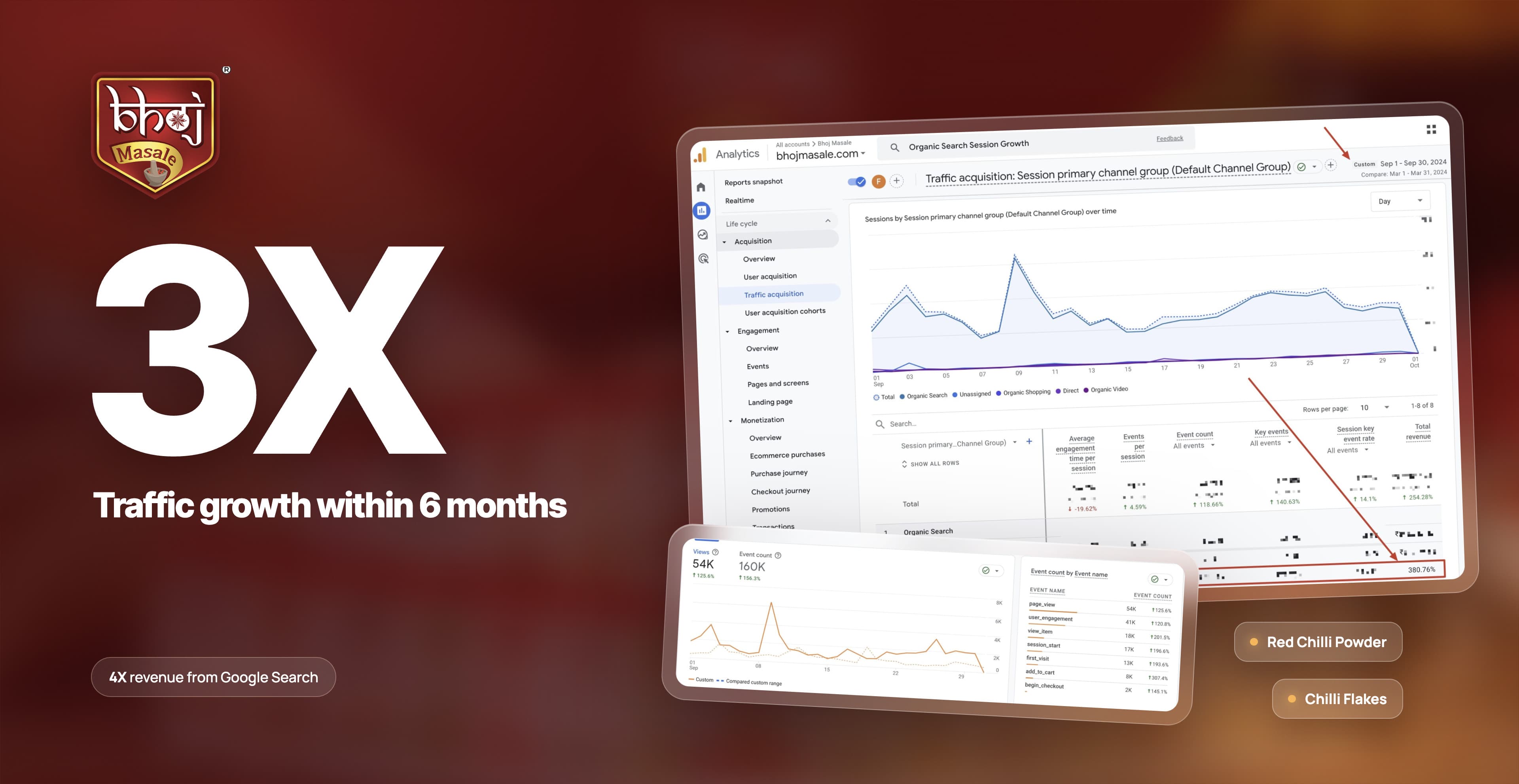



























































D2C FMCG in India is a category with two front doors - Shopify D2C and quick-commerce (Blinkit, Zepto, Instamart) - and margin economics that punish amateurs. AOV is typically ₹400 - ₹1200, gross margin 40-55%, and returns minimal but COD fees + shipping + QC often eat 15-20% of revenue. Baclinc has operator-level proof in this category. Bhoj Masale (premium spices) hit 4× revenue in 6 months on our Meta + Google + SEO engine, ranking for 'Red Chilli Powder' and generic spice category queries against Tata Sampann, MDH and every heritage brand. We're a Mumbai-based agency (founded 2017 by Shalmali Parkar and Abhishek Yadav, 25+ team, 150+ clients, ₹50Cr+ in managed ad spend). For food, spices, beverages, supplements and snack D2C brands, we ship Meta + Google performance, Shopify CRO, SEO against category generic terms where volume is real, quick-commerce channel ops where relevant, and retention tuned to consumable replenishment cycles.
Indian D2C FMCG economics are tight. Spices: AOV ₹400 - ₹800, gross margin 45-55%. Beverages (premium): AOV ₹500 - ₹1200, margin 40-50%. Supplements: AOV ₹800 - ₹1800, margin 55-70%. Snacks: AOV ₹300 - ₹700, margin 40-50%. The repeat rate at day 60 is what decides profitability - consumable category repeat should hit 25-40% for a well-run brand; below 20% the P&L doesn't close. Channel mix: Meta 50-65%, Google (branded + category) 15-25%, quick-commerce own-brand advertising 5-15%, retention 15-25% of revenue at maturity. Quick-commerce (Blinkit, Zepto, Instamart) is now a material third leg for at-home FMCG - for some categories (beverages, snacks), it's 40%+ of D2C volume. SEO works specifically on product-name queries where legacy brands cede ground through bad site hygiene; category-generic queries like 'best protein powder India' are Amazon / Mondelez territory unless you have sustained budget. Where most D2C FMCG marketing fails: CAC:LTV miscalibration (paying ₹400 CAC on ₹70 contribution is not a 'we'll make it up in volume' problem), quick-commerce ignored despite 30%+ category share, retention treated as emails instead of replenishment logic, and category-generic SEO attempted when product-name SEO is the real opportunity.