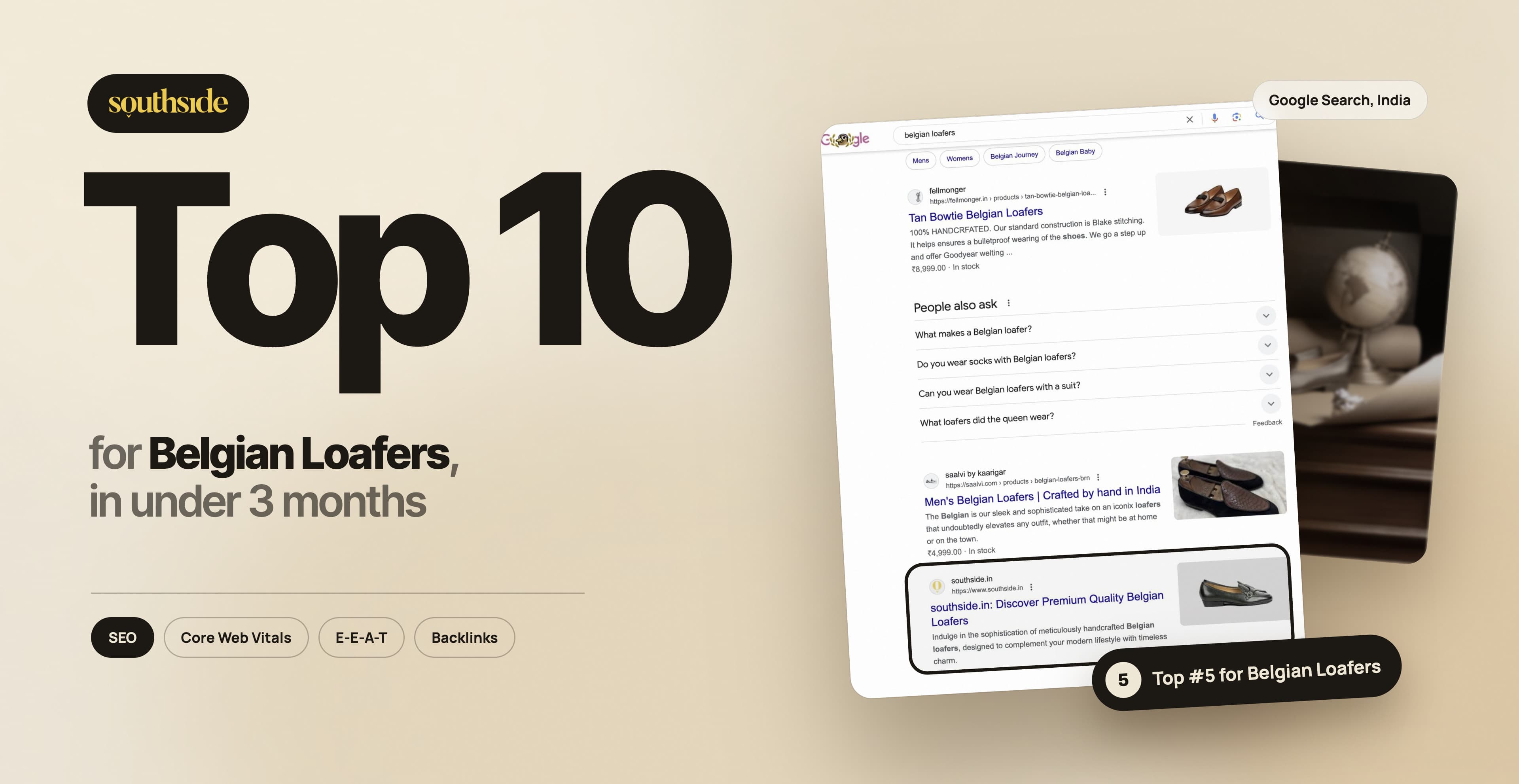





















































Shoppers increasingly ask LLMs before they Google: 'best Indian brand for high-rise flared jeans', 'where to buy Belgian loafers in India', 'sustainable cotton kurtas under ₹2000'. If your content is the LLM's cited answer, discovery is cheap. If not, you compete in paid alone. Fashion AEO is engineering your style guides, collection pages and product stories for LLM extraction. What makes fashion distinctive is that the model is being asked to make a taste and fit judgement, not just retrieve a fact, so it leans on whatever it can verify: consistent brand entity data, review volume across more than one platform, and third-party roundups that name you alongside your competitors. A brand with immaculate schema and no external mentions still gets left out of the answer.
Fashion LLM queries are patterned into a small number of repeating shapes: style advice such as what to wear to an occasion, sizing and fit questions such as how a cut should sit, brand comparison such as the best Indian brand for a product type, and occasion-specific shopping such as wedding guest or office wear. Each shape is a content slot, and the models reward short direct answers, question-shaped headings, FAQ structure and named-author credibility. Beyond the on-page work there are two off-site levers that decide fashion citations. The first is entity consistency, meaning the founding year, city, founders and product range agree across your own schema, Google Business Profile, LinkedIn and any startup or press listings, because a model that finds contradictory facts hedges by naming a safer competitor instead. The second is presence in third-party listicles and roundups, since a query asking for the best Indian brand for a category is answered largely from pages that already rank brands against each other. Review velocity across platforms sits underneath both, because a brand with recent reviews reads as currently trading rather than dormant.