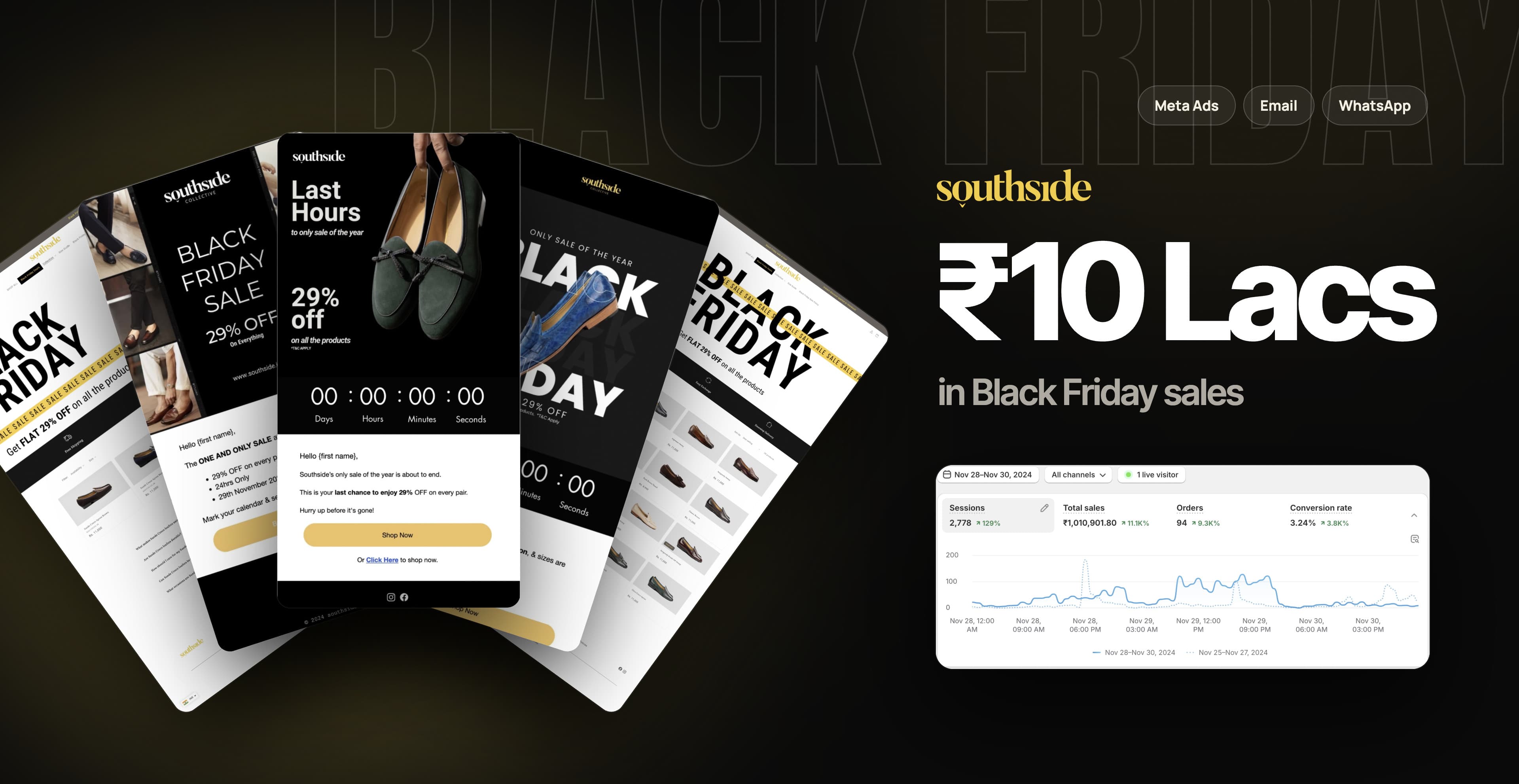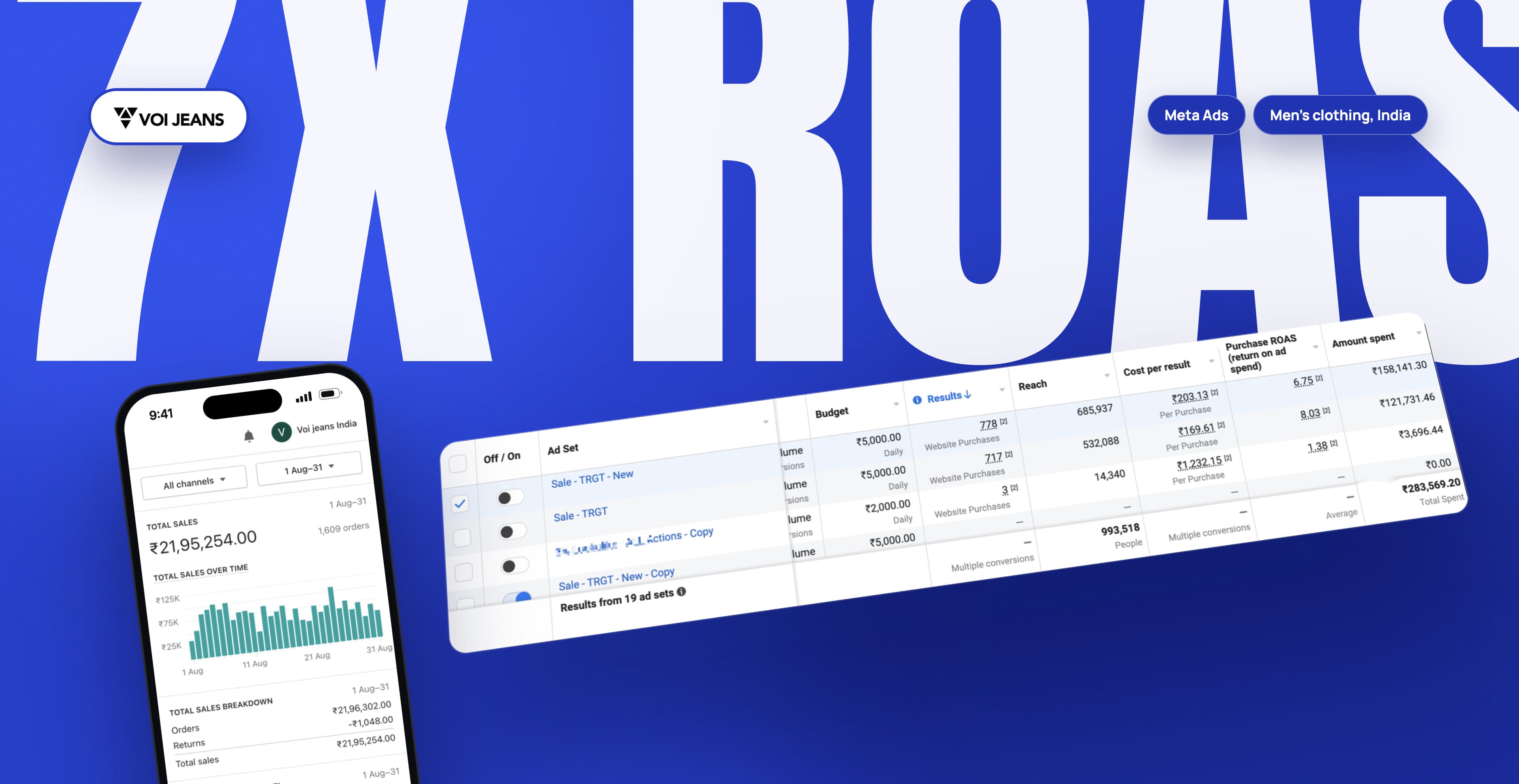



























































Performance marketing for Indian D2C fashion is a creative-velocity and net-contribution discipline. VOI Jeans, a menswear brand with 70+ retail outlets going D2C, hit 7x ROAS on our Meta plus Google plus retention engine. Southside Collective's Black Friday campaign delivered strong single-day conversion through a Meta, email and WhatsApp stack. The pattern is consistent: 25-40 creative variants a month, compliance-clean pixel setup, Shopify speed under 2.5s on mid-range Android, and net-contribution tracking after returns and COD fees as the only scorecard that matters. The reason fashion is harder than it looks is that the returned unit is not a rounding error. On apparel it is one order in five, on footwear closer to one in three when COD is heavy, and a dashboard that never subtracts it will confidently tell you to scale a campaign that is losing money.
Indian fashion Meta economics: 60-75% of blended spend, CPM 40-60% higher than 2022, blended CPA 1.5-2.5x higher than category promises. Google: 15-25% of spend, branded and Shopping dominant, non-brand category search rarely clears CAC on sub-₹2K AOV. YouTube: 5-10%, premium categories only above ₹3K AOV. Returns reshape the math at 18-30% on apparel and 25-40% on footwear COD. A campaign at 4.5x gross ROAS with 25% returns and an ₹80 COD fee on a ₹1,400 AOV is 2.9x net contribution, and we plan to that number rather than to the dashboard. Two further structures matter in this category. Size availability drives wasted spend more than targeting does, because pushing traffic to a product whose core sizes are sold out burns budget on a page that cannot convert, so we gate scaling on inventory depth per SKU. And the prepaid versus COD split changes the whole calculation, since a COD order carries a fee, a return-to-origin risk and a delayed cash cycle, which is why prepaid incentives are a performance lever rather than a checkout detail.