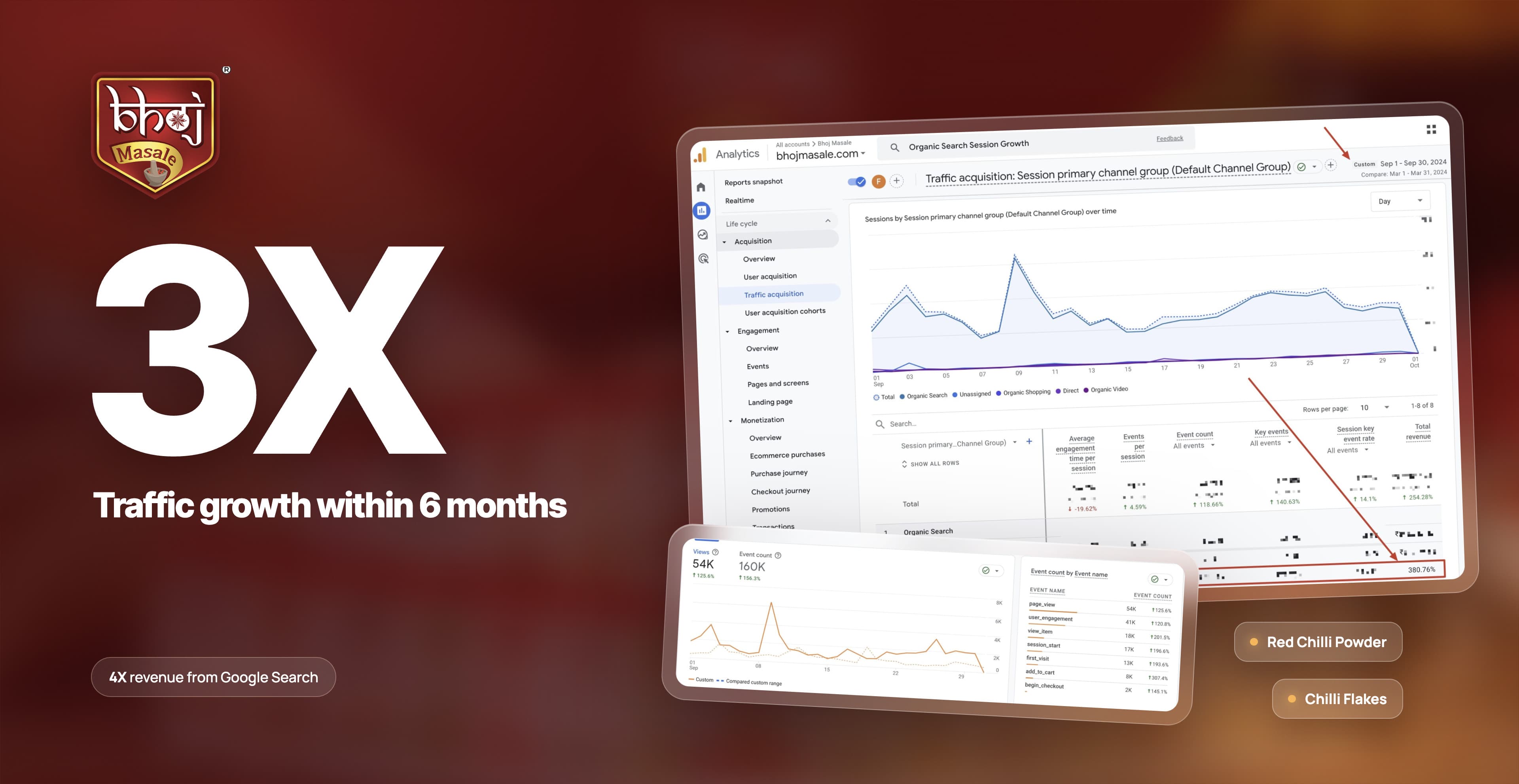



























































FMCG content is use-case plus provenance plus ingredient. Recipes that feature your product, use-case guides, ingredient sourcing stories, and founder or craft editorial pieces. We write 8-15 pieces a month for a scaling FMCG brand, structured around long-tail recipe SEO and product page depth. The reason recipes carry so much weight in this category is that Indian food search is preparation-led. Somebody looking up how to make a dish is one decision away from buying the ingredient, and that is a moment marketplaces capture badly. The other half of the work is less glamorous and more valuable: the product page itself, where ingredient lists, nutritional detail, sourcing, shelf life and storage answer the questions that stall a first purchase of something a person is going to eat.
Content types that compound for FMCG are recipes with proper markup, use-case and how-to guides, ingredient deep dives, provenance editorial, founder POV and customer outcome stories. Volume for a scaling brand sits around 8-15 pieces a month. Recipe markup matters because rich results for recipe queries still outperform plain listings by a wide margin, and the same structure is what makes a page extractable by answer engines. Two disciplines separate content that sells from content that merely gets traffic. A recipe page has to carry a commercial path inside it, meaning the product named in the ingredient list, an inline link to the product page and the full ingredient set offered as a bundle, otherwise it becomes a food blog that happens to be hosted on a shop. And claims have to be handled carefully, because nutritional and health language in Indian food is regulated, so wording has to stay within what the label and the testing actually support rather than drifting into implied treatment claims that create risk for the brand.