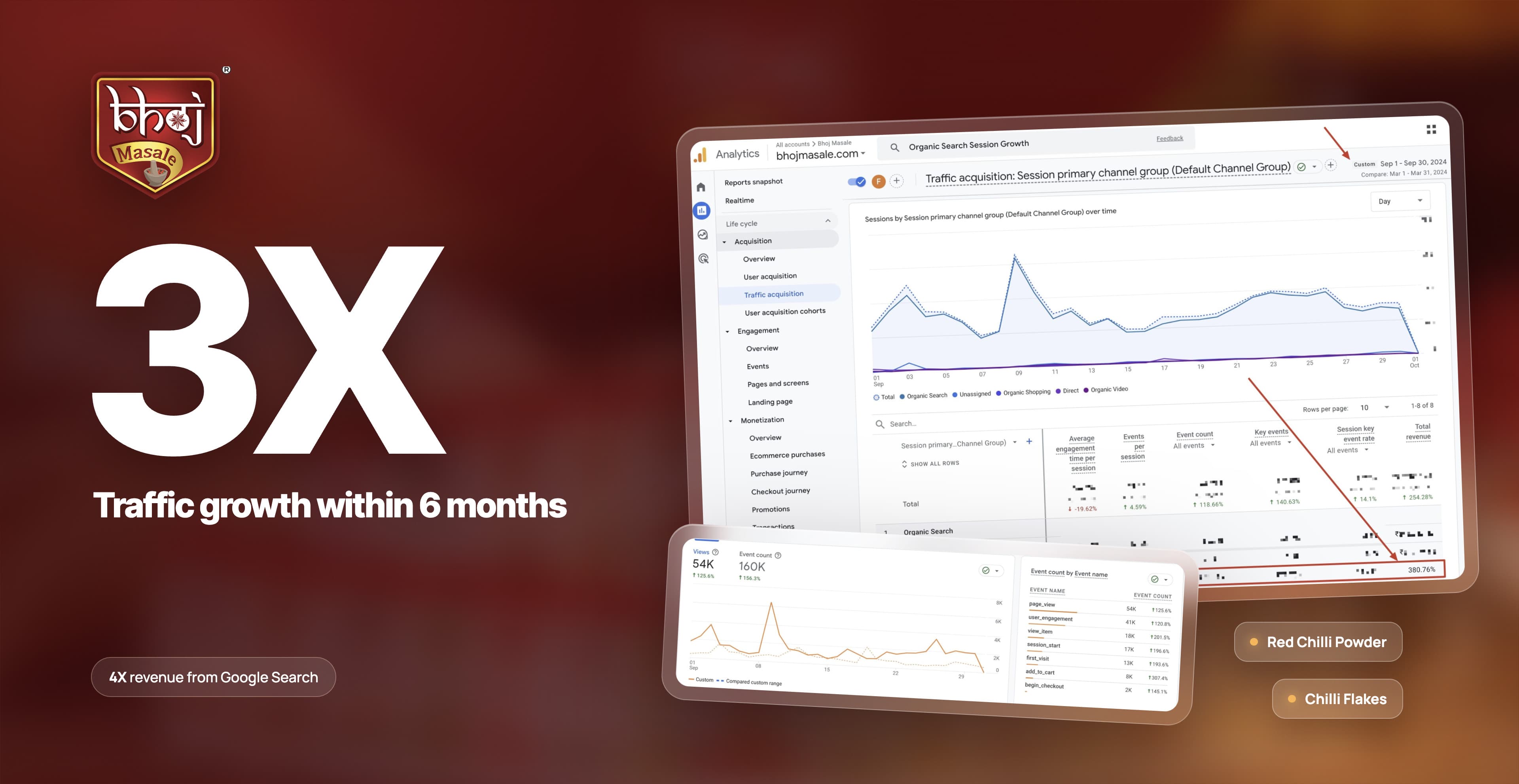



























































Performance marketing for D2C FMCG operates inside tight margin economics. Bhoj Masale hit 4x revenue in 6 months via Meta, Google and SEO, but the growth came from repeat buyers rather than from first-order CAC optimisation alone. We run Meta-heavy creative engines, Google branded and Shopping, quick-commerce ad ops on Blinkit, Zepto and Instamart where relevant, and retention flows tied to consumable replenishment windows. The structural difference from every other D2C category is that the first order is rarely profitable and is not meant to be. A ₹500 basket of spices cannot absorb Indian CPMs, shipping and a COD fee on its own, so the entire question is whether the second and third orders arrive on schedule. That makes the repeat rate the number the media plan is built around, not a metric reported afterwards.
FMCG Meta economics run at roughly 50-65% of spend with CPMs continuing to climb year on year. Google takes 15-25%, concentrated in branded, product-name and Shopping on the top SKUs. Quick-commerce takes 5-15% of ad spend depending on how much of the category has moved to ten-minute delivery. Retention contributes 15-25% of revenue at maturity. A spice or snack AOV between ₹400 and ₹700 supports a CAC cap somewhere between ₹80 and ₹180, while a premium supplement between ₹1,200 and ₹2,000 supports ₹300 to ₹600. The day-60 repeat rate decides profitability, and below roughly 20% the P&L does not close regardless of how efficient acquisition looks. Two further mechanics dominate the plan. Basket size is the cheapest lever available, because moving a customer from one pouch to a three-pack or a starter set changes the CAC ceiling immediately without needing cheaper traffic. And quick-commerce cannibalises D2C orders in convenience-led categories, so the two channels have to be planned as one demand picture rather than as competing dashboards.