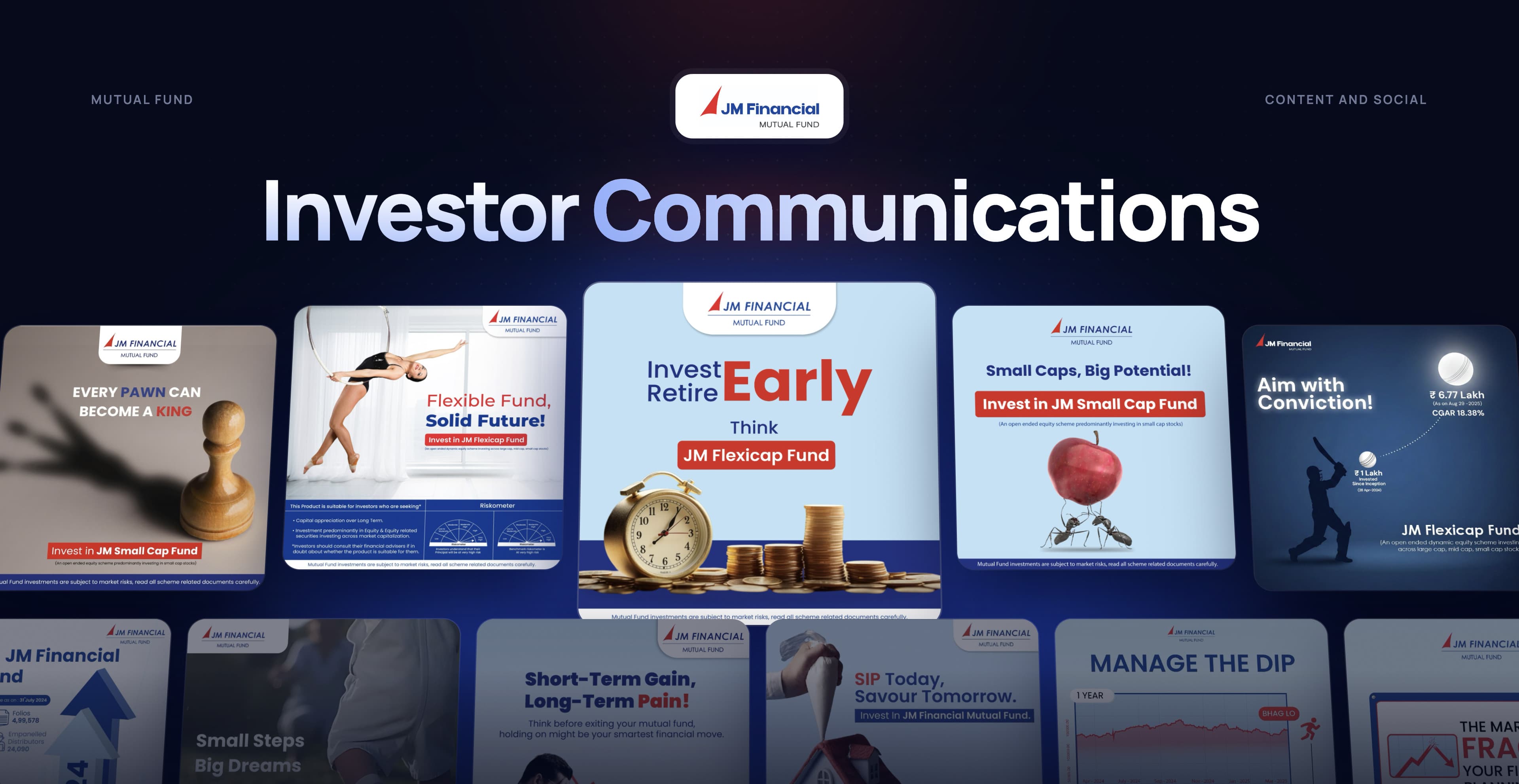



























































Website development for a regulated BFSI brand in India has structurally different requirements from D2C. Shopify - the default D2C stack - is rare in BFSI because AMCs, NBFCs, insurers and most fintechs don't sell SKUs through a cart; they run investor-facing content, scheme / product pages with regulator-filed data, lead-gen forms under DPDP consent constraints, and in many cases a logged-in investor / borrower / policyholder portal. The typical architecture is custom Next.js (or a comparable React-SSR framework) plus a headless CMS (Sanity, Contentful, Strapi) for compliance-reviewed content, plus a dedicated identity + consent layer for DPDP. Baclinc's web team ships on this stack regularly - our work includes the JM Financial Mutual Fund compliance-content surfaces and a broader portfolio of 150+ client builds including the Shopify-scale D2C work (Ariana, VOI Jeans, Southside, Bhoj Masale) where we've learned what scales and what bottlenecks. Our BFSI website development agency practice is organised around five load-bearing realities: the SEBI / IRDAI disclosure component has to be a reusable library not a per-page copy-paste (so a regulation update ships once, not forty times); the lead-gen form is a DPDP consent-architecture problem first and a conversion-rate-optimisation problem second; multi-language routing (Hindi / Marathi / English) has to be in the architecture from day one rather than retrofitted; accessibility (WCAG 2.1 AA minimum) is non-negotiable for financial-product pages; and A/B testing has to run inside compliance guardrails without shipping non-reviewed copy to live traffic.
The Indian BFSI web stack has consolidated around a specific architecture pattern over the last three years, and knowing where the pitfalls sit is most of the job. For mutual fund houses, the typical stack is Next.js or Gatsby on the frontend, Sanity or Contentful for editorial (because Compliance needs staging, versioning and scheduled publishing with audit trails), a headless search layer (Algolia or a self-hosted Elastic) for scheme search, and integration points into the AMC's transaction partner (MF Utility, BSE StAR MF) for SIP initiation. The compliance-content workflow is the non-obvious driver - editorial staff need workflow states (draft / in-review / cleared / published / archived) mapped to the Compliance Officer's actual approval behaviour, and a publishing rule that only cleared content can go live. NBFC websites have different priorities - a lead-gen application funnel is usually the main commercial surface, which means form architecture is load-bearing. A personal-loan application form that asks 8 fields on a single page with separated DPDP consent, truthful APR disclosure in the header, and a server-side submission that respects consent flags in downstream CRM pushes is architecturally different from a D2C contact form. Insurance sites layer another constraint - per-LOB disclosure requirements (term, health, motor, ULIP) mean the component library has to select the right disclosure set based on the product being rendered, not paste a universal block. Fintech adds portal architecture - a logged-in user experience where KYC, transaction history and product-specific features live under authentication, with SOC 2 / ISO 27001 posture often required by the banking partner. Performance-wise, BFSI pages need to hit LCP under 2.5s and INP under 200ms on mid-range Android because Google's Page Experience signal now materially affects rankings in YMYL categories. Shopify-default sites routinely miss this because of app-bloat; Next.js with proper code-splitting, ISR and image optimisation hits it cleanly. The non-negotiable accessibility floor - WCAG 2.1 AA - is a legal requirement under India's Rights of Persons with Disabilities Act (2016) framework for public-facing financial services, not a nice-to-have. The last under-appreciated reality is observability - regulated BFSI sites need error tracking (Sentry), consent-flag logging, form-submission audit trails and incident-response runbooks from day one. A 3-hour outage on a mutual fund transaction page is not a UX problem; it's a regulatory-notice problem.