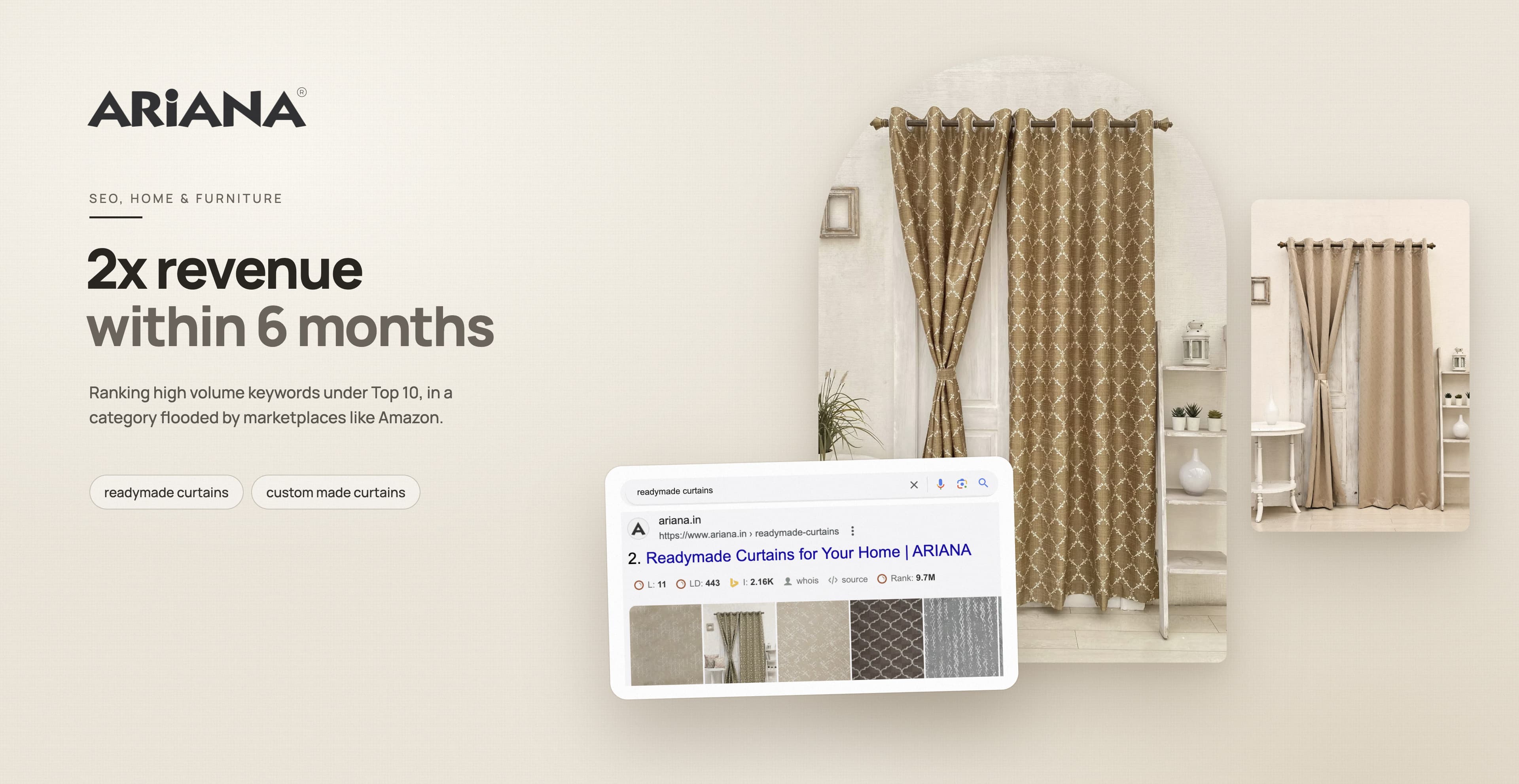



























































Home D2C performance has longer consideration windows, typically three to fourteen days, and higher logistics costs at roughly ₹200 to ₹800 of shipping per parcel. The Meta and Google stack we ran for Ariana.in delivered 2x revenue in six months through consideration-cycle retargeting, creative that led with room context and material detail, and net-contribution tracking that included reverse logistics. The long window is what most agencies get wrong. A furniture or furnishing purchase involves measuring a space, agreeing with somebody else in the household and often waiting for a salary date, so an account optimised on a seven-day click window will systematically undercount its own results and kill campaigns that were working. We set the attribution window to match how the category actually buys before we make a single scaling decision.
Home Meta economics take 45-60% of spend, with CPMs at parity with other D2C but CPA running 1.5-2x higher because of the longer consideration. Google takes 20-35% across branded, product-name, narrow category and Shopping. Retargeting takes 15-25% and is unusually important because of the decision window. Pinterest earns 5-15% for premium brands. Returns run 5-12%, reverse logistics ₹200 to ₹500 a unit and COD fees ₹50 to ₹100. Two mechanics decide whether the account is profitable. Parcel size dictates the true cost of a sale, so a large-format item that ships by surface freight and returns at multiples of its outbound cost needs a different CAC ceiling from a cushion cover, which means budget decisions belong at SKU level rather than campaign level. And delivery timelines are a conversion variable in their own right, because a buyer who is told an item arrives in four days converts materially better than one told three weeks, so the ad and the landing page have to be honest about lead time rather than discovering it at checkout.