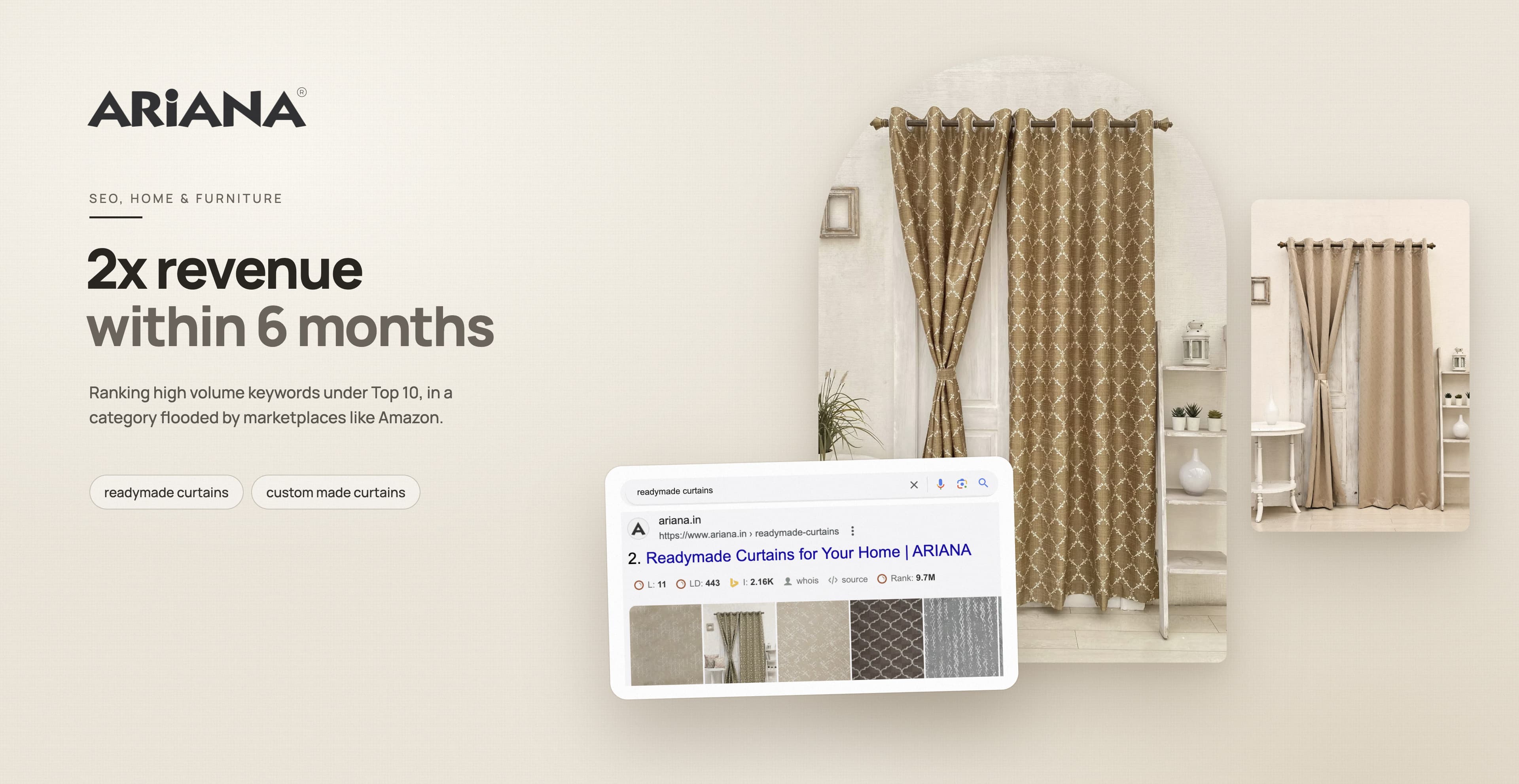



























































Home D2C SEO has one big signal: Ariana.in ranked Top 10 for 'Readymade Curtains' in 6 months against Amazon and every marketplace. That is the achievable edge - narrow, specific category-generic terms where the marketplace's SEO is lazy and a focused brand can win. Broad category terms such as 'best furniture India' or 'home decor online shopping' remain marketplace territory. We run Shopify technical hygiene, narrow category cornerstones, product schema depth, and editorial content around room types and decor styles. What makes home unusual is that the buyer arrives with a measurement problem. Somebody searching for curtains has a window, a drop and a track in mind, and the page that answers the sizing question in their own terms beats the page with better photography almost every time.
Home SEO sorts into tiers. Product-name queries combining brand and item are easy to own and are where organic revenue begins. Narrow category generics such as readymade curtains, cotton bed sheets or a wooden coffee table are where Ariana won and where the competitive set is other brands rather than only marketplaces. Broad category terms are marketplace-dominated and should not absorb early budget. Shopify issues specific to home are large-image optimisation, filter-state canonicalisation across size, colour and material, and collection page depth. Two further dynamics shape a home programme. Size and dimension queries are a large and under-served slice of demand, because a buyer searching for a specific curtain drop or bed size has bought already in their head and simply needs the right page to exist, which makes dimension-led landing pages unusually efficient. And room-type editorial is the compounding layer, since a guide to styling a living room or choosing bedroom curtains keeps earning traffic and internal-link equity long after a seasonal campaign has decayed, provided it links properly into the collection pages it supports.