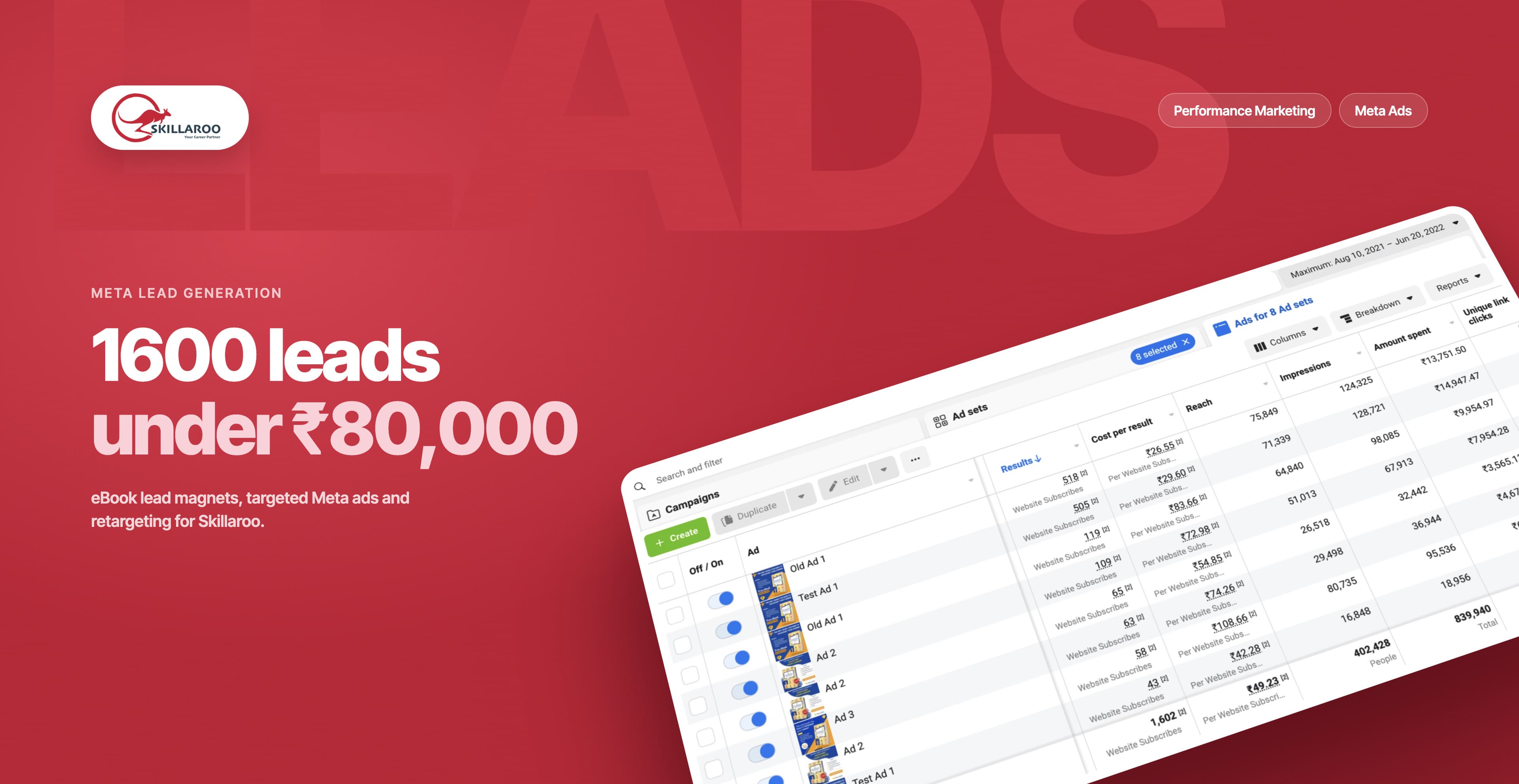











































EdTech content has three jobs: capture organic search traffic, serve as lead magnets, and reinforce teacher/product credibility. Each requires named-author content with real subject expertise - AI-generated or agency-voice content doesn't rank for education queries and doesn't convert for lead capture. We run a teacher-authored content engine: subject guides, exam strategy pieces, topic explainers, lead-magnet eBooks, student outcome long-forms, and AEO-structured cornerstone pages. Accuracy carries a weight here that it does not in most categories, because a learner who finds an error in a worked solution or a superseded syllabus reference stops trusting the teaching itself, not merely the page. So subject content goes through a review step by someone qualified in that subject before publishing, and anything referencing a syllabus, exam pattern or cutoff gets a scheduled recheck against the current official notification.
Content volume and type by segment. Test prep: 8-15 pieces/month - subject guides, strategy content, mock-test analysis, cut-off and exam-update content. Upskilling: 5-10 pieces/month - career-path roadmaps, skill breakdowns, certification paths, industry reports. Certification: 5-8 pieces/month - exam syllabus, study plans, pass-rate analysis, comparison content. K - 12: 10-20 pieces/month - chapter guides, NCERT solutions, sample questions, concept videos. Vernacular: Multiply by 1.5× if running Hindi or regional in parallel. Lead magnet types - eBooks (upskilling and career content), diagnostic tests (test prep), roadmap PDFs (career decision), masterclass recordings (certification), subject concept books (K - 12). Student outcome long-forms - authenticated, specific, with permission - are the single highest-trust content format for new-enrollment conversion. We run these as first-class content, not as occasional case studies.