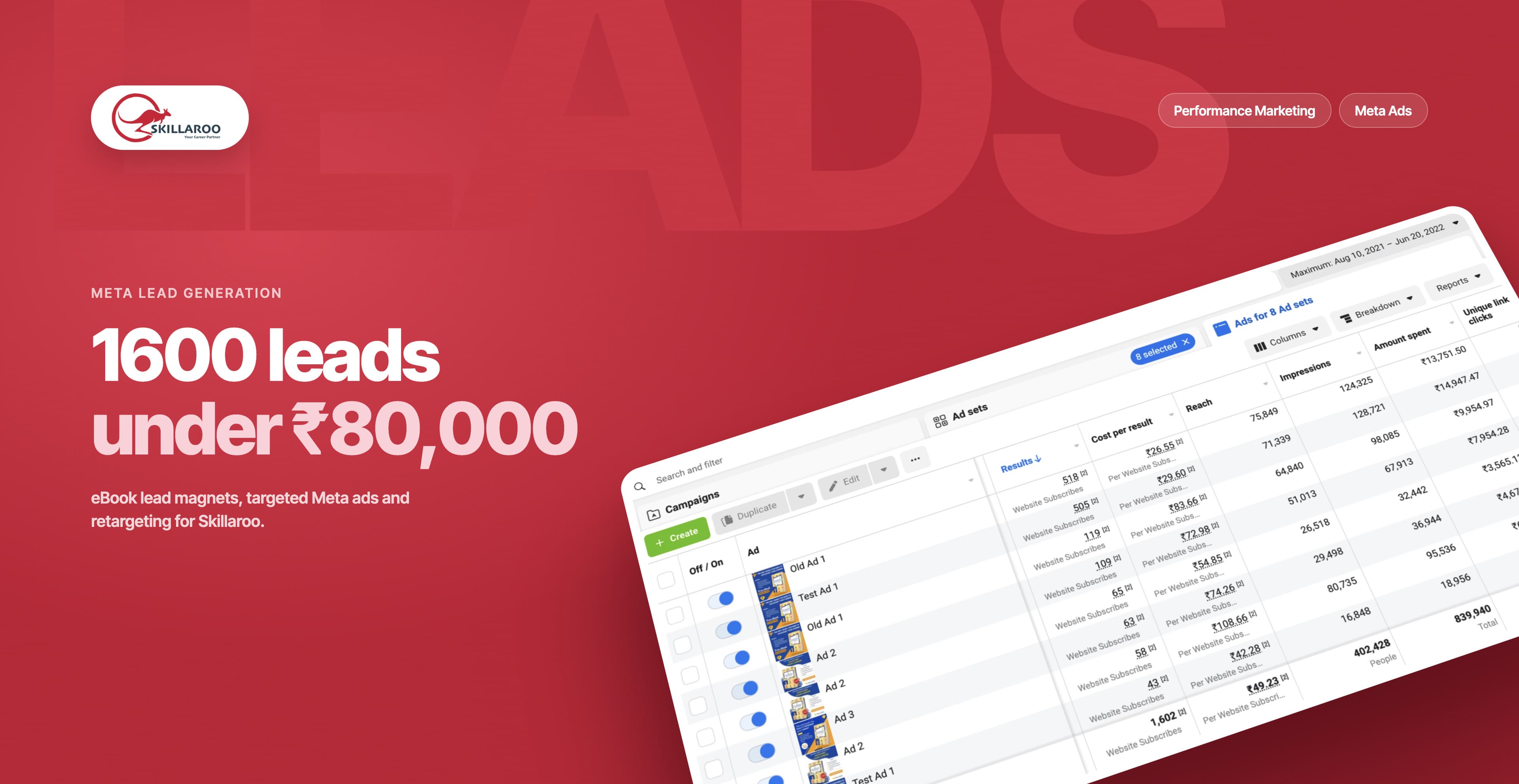



















































EdTech SEO is a query-intent game. Students actively search - 'best JEE online coaching', 'free CAT mock test', 'CFA level 1 study plan', 'Python course for beginners in Hindi' - and the page that answers that query best captures the lead. We design topical clusters around learner decision points (awareness, comparison, decision, enrollment), wire Course and FAQ schema across every cornerstone, and layer vernacular content where regional audiences outperform English at 30-50% lower CPL. The Skillaroo funnel - 1,600 leads at ~₹50/lead - was paid-led; for SEO, the same magnet strategy wins long-term compounding lead flow. The structural advantage in education is that intent is calendar-driven, since exam cycles, admission windows and result dates repeat annually. Content published against next season's cycle matures into position before the demand arrives, a planning luxury most categories never get.
Google treats education content as adjacent to YMYL - test prep and certification content especially - which means E-E-A-T (author credibility, verifiable subject expertise) matters more than raw volume. The ranking pages for 'JEE Main strategy' or 'CAT verbal preparation' are the ones with named teachers, verifiable track records, structured study-plan content and FAQ schema, not pages stuffed with keywords. Query clusters by segment: Test prep - 'how to prepare for X', 'X syllabus', 'X mock test', 'X previous papers', 'X coaching comparison'. Upskilling - 'how to become Y', 'Y course', 'Y certification path', 'best Y course comparison'. Certification - 'X exam syllabus', 'X study materials', 'X pass rate', 'X vs Y'. K - 12 - 'class X math chapter Y', 'NCERT solutions', 'sample papers', 'CBSE X guide'. Vernacular SEO is a genuine moat - Hindi or regional-language search traffic for upskilling and vocational content is growing 2-3× faster than English and has materially lower competitive density.